Energy Storage Test Winner: SAX Power Home Plus 7.7 kWh
System Data
| Nominal Capacity | 7.68 kWh |
| Usable Capacity | 7.0 kWh |
| Modularly Expandable | up to 23 kWh |
| Battery Type | LiFePO4 |
| Cell Data | 3.2 V; 20 Ah |
| Nominal Voltage | 230 V AC |
| Nominal Power (normal) | 4.6 kW (3.68 kW for AT and CH) |
| Nominal Current (normal) | 20 A (16 A for AT and CH) |
| Storage Weight | 72 kg |
| Storage Dimensions | 625 × 625 × 250 mm |
| Cooling | Passive Cooling |
| Display Type | e-Paper Display |
Operating Data
| All-In-One | Integrated Inverter Function |
| Conversion Efficiency | 98.6% |
| Communication | Modbus RTU, Modbus TCP/UDP |
| Communication Ports | RS485, RJ45 (LAN) |
| Battery Capacity Warranty | 10 years min. 80% |
| Operating Ambient Temperature | 5°–35°C |
| Max. Relative Humidity | 90% |
| Dust and Water Protection | IP 30 |
| Certification | VDE-AR-N 4105, UN 38.3 |
| Protection Class | 1 (Protective Earthing) |
| Standby Consumption | approx. 4W |
| Emergency and Backup Power Capable | yes |
The smarter way to
independent energy supply
A photovoltaic system on the roof serves to generate electricity in an environmentally friendly and cost-effective way. However, most electricity is supplied by the PV system at midday, when the sun is strongest. But then, electricity consumption in most households is rather low. The generated electricity is therefore fed into the grid. In the evening, however, when consumption in most households increases, the sun produces less electricity.
The SAX Power Home Plus 7.7 energy storage system is the optimal solution for this. It stores excess energy from midday and releases it in the evening when demand is high. Thus, the storage system ensures greater self-sufficiency and lower electricity costs. Thanks to the patented circuitry of the SAX Power energy storage system, it also stands out from conventional batteries and offers:
- High-voltage technology with maximum safety
- High fire protection through cell disconnection in seconds
- Highest efficiency for optimal use of your solar energy, as confirmed by the HTW energy storage test: The SAX Power Home Plus is the test winner
- Environmentally friendly production chains through the use of cobalt-free cells
- Made in Germany
In this way, your valuable solar power is used directly on site in a cost- and energy-efficient manner. SAX Power Home Plus: the energy storage test winner


Maximum Safety
- No fire or explosion hazard
- Use of LiFePO4 cells (Lithium Iron Phosphate)
- 0.2 millisecond shutdown time in case of fault
- 18 volts maximum voltage after shutdown

Easy Installation
- Have Smartmeter or SAX HEMS* installed by a qualified electrician in the meter cabinet
- Hang up and connect the storage unit
- Done!
*SAX Home Energy Management System

Cost Savings
- AC voltage directly from the energy storage system
- Existing PV systems: Saving the battery inverter
- New PV systems: Saving the hybrid inverter
- The innovative technology ensures particularly efficient use of your surplus
- Long battery life

Storage Monitoring
- Convenient via app or web portal
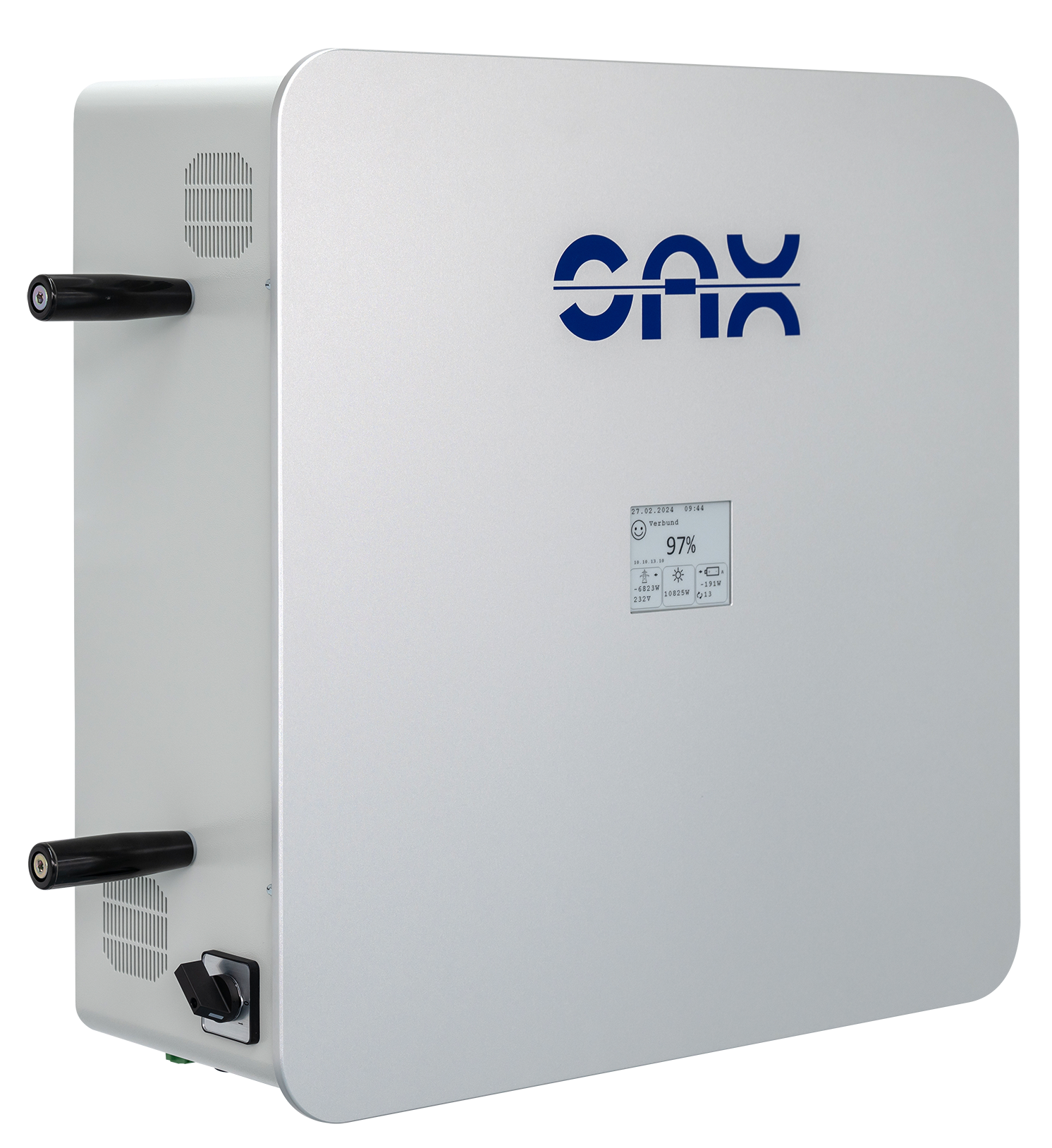
- Key data readable directly on the storage unit’s e-Paper display

Light, compact, and modularly expandable
- Up to 30% smaller and lighter than conventional systems
- Expandable to 15.4 and 23 kWh
- No time limit for expansion
- Retrofitted battery modules operate at full capacity

Very High Efficiency
- Extremely low-loss operation
- 98.6% conversion efficiency
- Standby consumption <4 watts
Emergency Power
- Automatic switch to emergency power in case of grid failure
- Island and black start capable
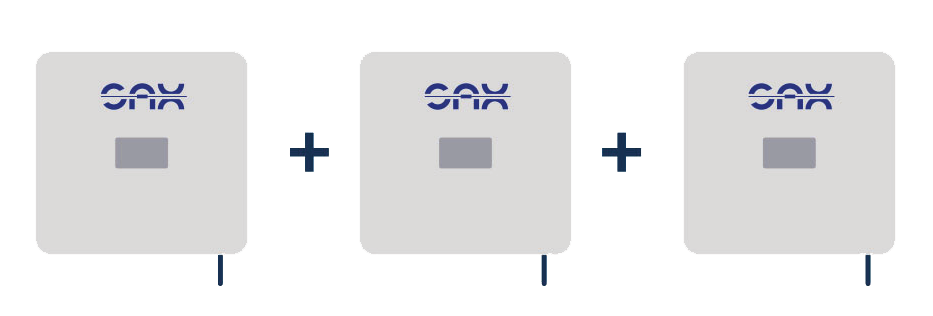
- Three energy storage units enable three-phase current

Long lifespan and environmentally friendly
- Gentle use of each battery cell through rotating charge balancing
- Intelligent control and optimization of the overall system
- Cobalt-free battery cells

German Innovation
- Development, final assembly, and quality control in Germany
- German Customer Service
- Winner of the Baden-Württemberg Innovation Award 2022
- Energy Storage Test Winner 2025 of the HTW Berlin Energy Storage Inspection
Energy Storage for Retrofitters
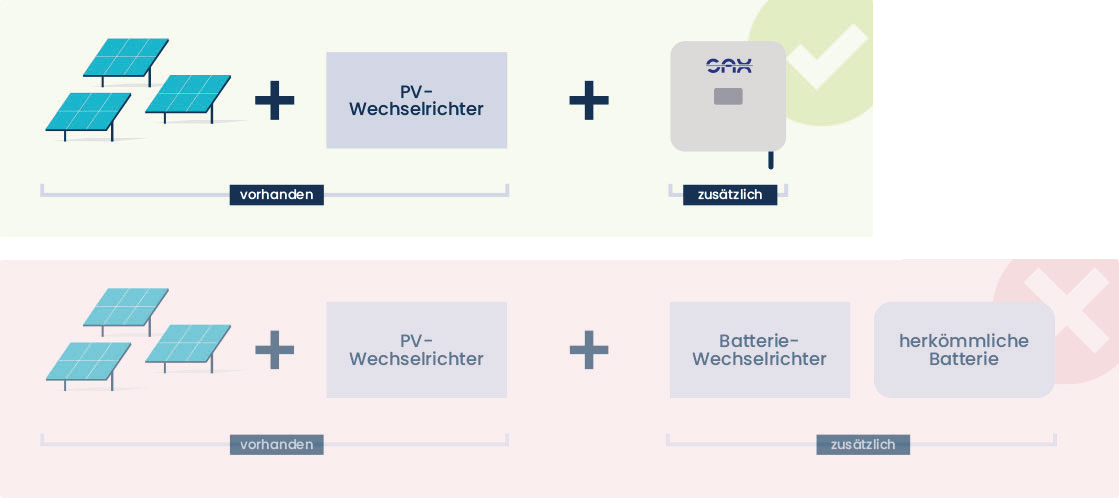
The SAX Power Home Plus 7.7 energy storage test winner does not require an inverter on the battery side: a clean and simple solution.
Energy Storage for New Installations
The SAX Power System does not require an inverter on the battery side. Therefore, a new installation does not need an expensive hybrid inverter. This saves costs and installation space.

Energy Storage for Battery Expansions
Due to a special balancing method, the SAX Power Home Plus energy storage system optimally balances the charge states of the cells. Weaker cells have almost no influence on the performance of the entire battery. When expanding later, the advantage of the SAX Power circuit is particularly clear: the new battery modules deliver full performance and are not negatively affected by older cells.